Sprint 3 Retrospective and Sprint 4 Planning: Building Towards a Complete Pipeline
Today was a full day of meetings. The team sat down with the supervisor, ran the Sprint 3 retrospective, and closed with Sprint 4 planning — all in one sitting. This post covers what was learned in each, and lays out the plan for the sprint ahead.
What We Learned from Our Supervisor
The supervisor meeting focused almost entirely on the viva, and the guidance reshaped how the team is thinking about the presentation.
The biggest reassurance: the viva does not need to follow a fixed format. HTML slides are actively encouraged over a rigid template, which gives the team more room to present the system the way it actually works. A few specific pieces of advice stood out:
- Open with a storyboard, not the tech stack. Start by showing how a car owner would actually use Granite Lifeline, and only move into technical detail once that story is established
- Use video for the dashboard. Rather than clicking through a live demo, a short recording saves time and avoids the risk of something breaking mid-presentation
- Visualise, don’t enumerate. Technical concepts should be explained through diagrams and visuals wherever possible, instead of walking through bullet points
- Be ready to justify design choices clearly. For decisions like using an LLM instead of pre-written report templates, the reasoning needs to be well-articulated — the “why” matters as much as the “what”
Sprint 3 Retrospective
With Sprint 3 wrapped, the team reflected on what worked and what needs to change heading into Sprint 4.
What went well:
- Team communication was responsive — issues raised in Discord were resolved quickly, with minimal back-and-forth
What we committed to improving:
- Every group must produce at least one ADR and one blog post per sprint, so decisions are documented as they happen rather than reconstructed later
- READMEs must be kept up to date immediately after any significant change
- Cross-layer impacts must be raised in Discord as soon as they’re identified, not left to surface later as a broken interface
- All team members must speak in both internal and supervisor meetings, to make sure everyone is comfortable fielding questions at the viva
Sprint 4 Plan
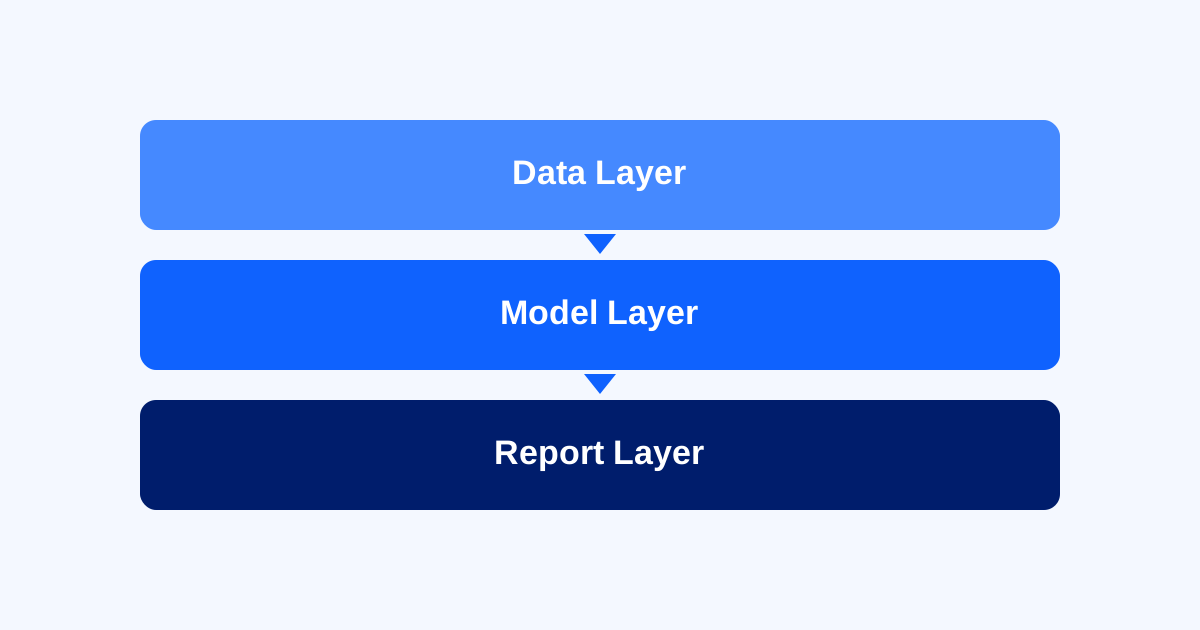
Sprint 4 runs from 15 to 29 July 2026. The goal for this sprint is ambitious but focused: connect all three layers into a working end-to-end pipeline, complete the Background chapter of the group report, and begin viva preparation around a shared slide structure.
Data Layer (Lei Pei, Qiuting Fu)
- Rebuild condition-specific baselines and feature reference summaries
- Finalise detection thresholds and confidence rules for active proxy failures
- Regenerate proxy labels and training-label outputs for the Model Layer
- Deliver updated
feature_dataset.csvand proxy-label files - Draft the Background and Design chapter sections for the group report
Model Layer (Ray Wang, Lucca Zhou)
- Switch the pipeline to consume the Data Layer’s
feature_dataset.csvdirectly - Regenerate
kit_residual_sample.jsonfrom real Data Layer data, with confirmed units - Fine-tune Granite TTM on healthy trips and produce a zero-shot vs. fine-tuned residual comparison
- Draft the Background and Design chapter sections for the group report
- Draft the Model Layer’s viva key points
Report Layer and Dashboard (Charlotte Yu, Jintong He)
- Complete the end-to-end pipeline connecting real Model Layer output to RAG-grounded diagnostic report generation
- Improve report quality for low-confidence and contradictory scenarios
- Complete real data integration across 3 confirmed anomaly types
- Implement Sprint 4 UI features: professional term highlighting and a per-section AI prompt generator
- Explore a what-if simulator
All Groups
Group report: Background chapter complete, Design chapter 50% complete by the end of Sprint 4.
Viva: each group drafts their layer’s key points in a shared markdown file; Charlotte assembles the final slides.
Closing
Sprint 4 marks a shift for the project — from three layers each working well on their own, to one connected system. It’s less about building new pieces now and more about making the existing ones talk to each other cleanly. Once real data flows unbroken from the Data Layer through to a finished diagnostic report on the dashboard, the team will finally be able to see, end to end, what Granite Lifeline actually delivers to a car owner.